What Alcoa's Safety Revolution Tells Us About GMP Middle Management
A supervisor who understands why a cleaning validation protocol exists will explain it differently to their team than one who just knows it's required. That shows up six months later as fewer repeat deviations. A QA officer who treats change control as a risk tool rather than a form catches the interaction effect that a tick-box approach misses.
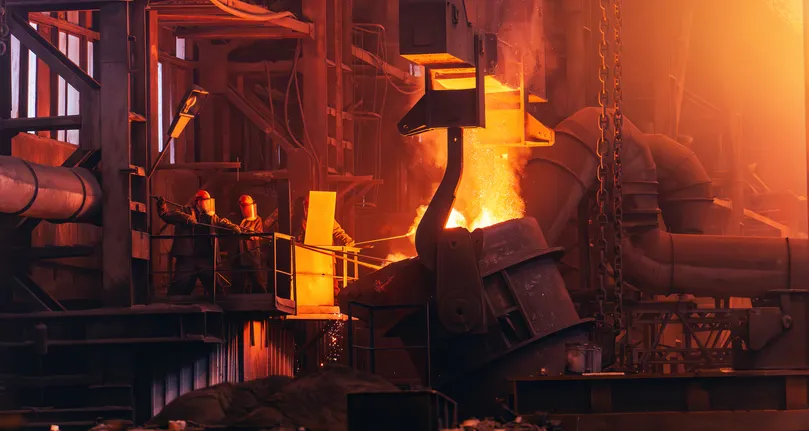
What Alcoa's safety revolution tells us about GMP middle management
Paul O'Neill's first shareholders meeting as Alcoa CEO in 1987 didn't go the way anyone expected. He walked into a ballroom at the Marriott in Manhattan and spent most of his time talking about worker safety. Not margins, not market share. Fund managers left the room to phone their brokers and recommend selling.
Over the next thirteen years Alcoa's market value grew fivefold and injury rates dropped to a fraction of the industry average.
The interesting part is what O'Neill actually changed. He didn't give speeches about safety being a priority. He gave plant managers and shift supervisors the authority to halt production lines when they saw a risk. No approval needed. And he shortened the reporting chain so that safety incidents had to reach his desk within 24 hours, with a remediation plan, directly from the plant manager. Not filtered through a VP.
That forced something. Supervisors couldn't just report what happened anymore. They had to understand their own processes well enough to explain why it happened.
Once people realised the authority was real, managers who'd been sitting on problems for years started raising them. Issues that had nothing to do with safety came up too, process inefficiencies, communication gaps between shifts, because the same people who spotted hazards also spotted waste. They'd just never had a channel for it.
The pharmaceutical parallel
I've spent most of my career in GMP-regulated manufacturing, and the structural problem is the same. Quality policy gets written at corporate level. SOPs get trained at operator level. But the translation between the two — what does this deviation actually mean, is this change control a genuine risk assessment or just a form to fill in, what do you do when the batch is under pressure and someone suggests a shortcut — that happens in middle management. Production supervisors, QA officers, team leads.
In most organisations I've worked with, that group gets the least development. And the results look exactly how you'd expect. Root cause investigations stay shallow, not because people don't care, but because nobody showed them how to look past the obvious trigger. Change control turns into paperwork because that's how they've seen it treated above them. Quality culture lives on management review slides and dies somewhere between the meeting room and the production floor.
O'Neill figured out something that applies well beyond aluminium: find the layer where operational decisions actually get made, and invest there. In pharma manufacturing, that's middle management.
What changes when you do
A supervisor who understands why a cleaning validation protocol exists will explain it differently to their team than one who just knows it's required. That shows up six months later as fewer repeat deviations. A QA officer who treats change control as a risk tool rather than a form catches the interaction effect that a tick-box approach misses. A team lead who can properly investigate a human error will find the scheduling pressure or the ambiguous SOP underneath, and fixing that prevents the next three incidents rather than just closing out this one.
You don't need different people for this. You need to develop the ones already doing the job.
(For the data integrity crowd: yes, I'm aware that ALCOA — Attributable, Legible, Contemporaneous, Original, Accurate — makes this possibly the most on-the-nose analogy in the industry.)